
Code Verification & Optical Character Recognition (OCR, OCV)
Industrial Code Verification & Character Recognition (OCR / OCV) at Line Speed
100% Traceability
Read, verify, and grade 1D/2D barcodes and human-readable text—even on the most demanding materials and highly reflective surfaces. Ensure seamless end-to-end traceability, meet strict ISO/IEC and UDI compliance mandates, and eliminate costly batch scrap with turnkey machine vision systems from aku.automation.

ISO/IEC & AIM-DPM Compliant: Standardized code quality verification meeting global standards
100% Read Rate at Maximum Line Speeds: High-speed barcode inspection without compromising throughput
Robust DPM Reading: Reliable Direct Part Mark (DPM) decoding on metal, glass, and plastic surfaces
Customers Who Trust aku.automation
We have been collaborating with numerous market leaders for years.


Challenge
When Unreadable Codes and Labeling Errors Disrupt Entire Supply Chains
In modern high-volume serial production, seamless end-to-end traceability is not optional—it is a contractual mandate. When codes cannot be reliably captured due to suboptimal marking quality or unfavorable illumination conditions, manufacturers face severe, business-critical operational risks.
Unreadable Direct Part Marks (DPM)
Dot peen markings, laser engravings, or chemical etchings on rough, oily, or highly reflective metal and plastic surfaces frequently suffer from minimal contrast. Conventional code readers fail under these conditions—causing parts to be erroneously rejected as scrap or sent down the assembly line unscanned.
Incorrect Batch Allocation & Product Recalls
Misaligned, smeared, or incomplete human-readable text (expiration dates, lot/batch numbers, serial numbers) leads to incorrect packaging assembly. The result: expensive product recalls, contractual vendor penalties, and failed supplier audits (e.g., under IATF 16949 or EU MDR).
Inadequate Quality Control (Lack of Code Grading)
A barcode or 2D matrix code may barely pass internal inspection at the plant, but whether downstream processors or end customers can read it remains uncertain. Without standards-compliant verification per ISO/IEC guidelines, costly customer complaints occur post-delivery.
The Principle of aku.automation
An industrial code must be readable reliably—not just under ideal conditions. Our optical inspection systems combine advanced illumination technology with AI-driven evaluation algorithms to deliver maximum read rates, standards-compliant quality grading, and 100% process reliability.
YOUR SOLUTION: WHAT CODE VERIFICATION & CHARACTER RECOGNITION BY AKU OFFERS
Seamless Process Control at High-Speed Line Rates – Your Economic Advantages
Through the seamless interplay of adaptive illumination, industrial camera technology, and the vision processing platform aku.visionManager®, marking processes are transformed into a reliable inline quality assurance checkpoint:
100% Reading & Verification in Milliseconds
Whether linear barcodes, DataMatrix codes, or embossed human-readable text, every component is captured directly within the high-speed production flow
True Code Grading per ISO/IEC Standards
Beyond basic decoding (Read / No-Read), physical print and marking quality are evaluated according to international standards (e.g., ISO/IEC 15415, ISO/IEC TR 29158 / AIM DPM)
AI-Powered OCR & OCV Character Recognition
Severely distorted characters, variable fonts, dot-matrix printed surfaces, or embossed text on tires and cast parts are fault-tolerantly and reliably recognized using deep-learning classifiers
Complete Traceability & MES Integration
All read results, timestamps, inspection images, and quality grades are logged and transferred directly to your ERP, MES, or CAQ system via standardized industrial protocols (OPC UA, TCP/IP, Profinet)

INSPECTION SPECTRUM: WHAT DO WE DECODE AND VERIFY?
Universal Identification and Quality Evaluation of All Marking Types
Regardless of the substrate marked, our inspection systems cover the entire spectrum of industrial marking verification.
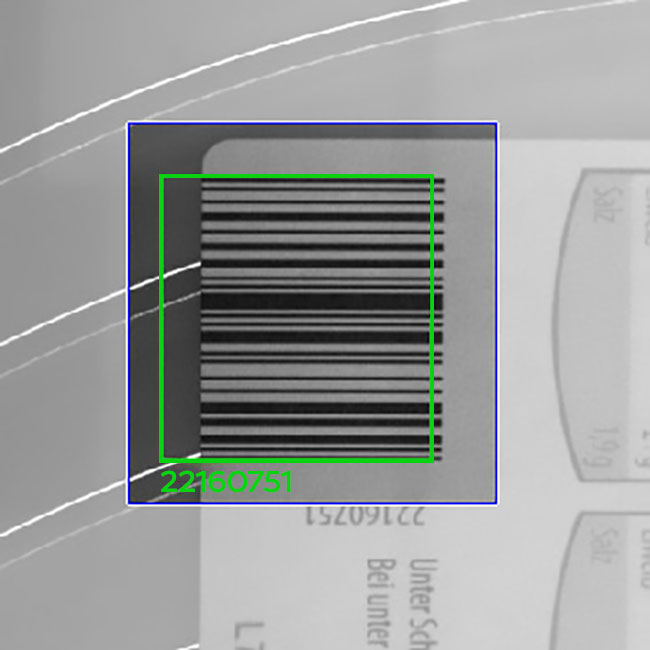
1D & 2D Codes (DPM & Labels)
-
DataMatrix & Miniature Codes: DataMatrix codes (ECC 200) and miniature codes (<1mm).
-
2D Matrix Formats: QR codes, Micro-QR, and DotCodes.
-
1D Barcodes: Standard linear 1D barcodes including Code 128, Code 39, EAN/UPC, and 2/5 Interleaved.
-
GS1 Compliance: GS1-compliant markings including UDI and DataBar formats.
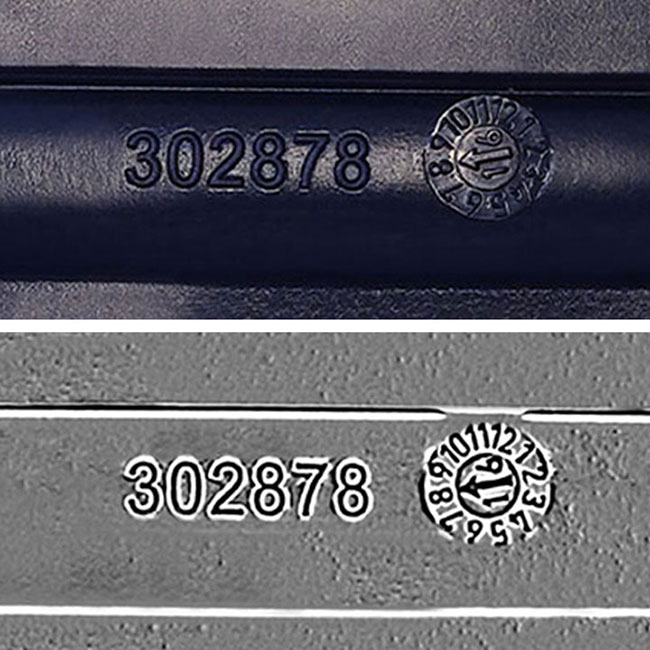
Optical Character Recognition (OCR) & Character Verification (OCV)
-
Optical Character Recognition (OCR): Reliable automated reading of human-readable text.
-
Optical Character Verification (OCV): Verification of text completeness and print fidelity.
-
Variable Data Inspection: Verification of batch/lot numbers, serial numbers, and expiration dates.
-
Challenging Marking Types: Inspection of embossed text and dot-matrix markings on rough surfaces.
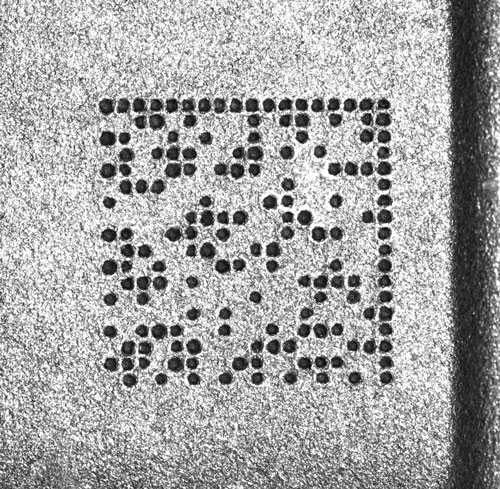
Quality Evaluation & Standards Compliance
-
ISO/IEC 15415 / 15416 Grading: Evaluation of critical parameters including contrast, modulation, and modulation errors.
-
AIM DPM (ISO/IEC TR 29158): Specialized code grading for dot-peened and laser-engraved direct part markings.
-
Geometric Distortion Verification: Measurement of axial non-uniformity and grid non-uniformity (raster distortion).
-
Contrast & Edge Inspection: Automated verification of symbol contrast and edge transitions.
Applied TECHNOLOGIES: CUSTOM OPTICAL IDENTIFICATION
The Right Sensor System and Illumination for Every Marking Type
Direct Part Marked (DPM) codes and human-readable text stand or fall with the right illumination. aku.automation combines specialized hardware with intelligent evaluation software.
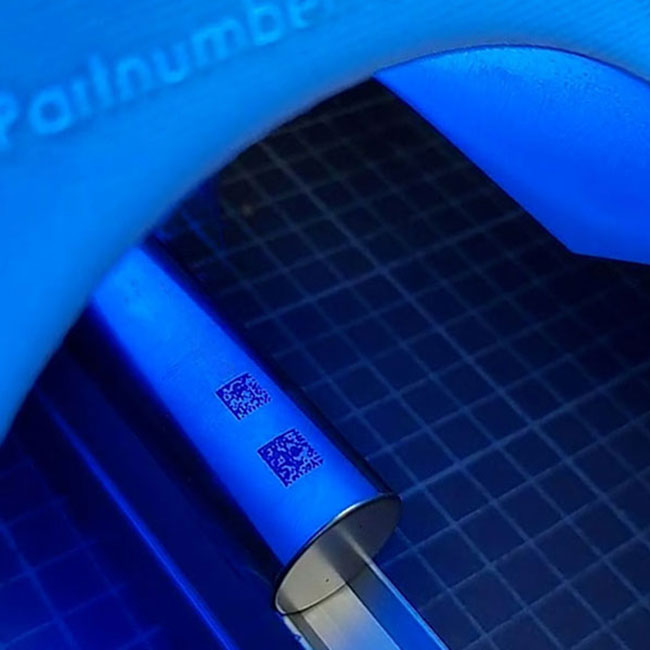
Specialized DPM Illumination & Polarization Filters
Designed to eliminate disruptive reflections and low contrast. Deploying dark-field, coaxial, or diffuse dome lighting makes dot peen marks and laser-etched structures razor-sharp on reflective metal or transparent glass surfaces.
Learn more about specialized DPM illuminations & polarization filter techniques
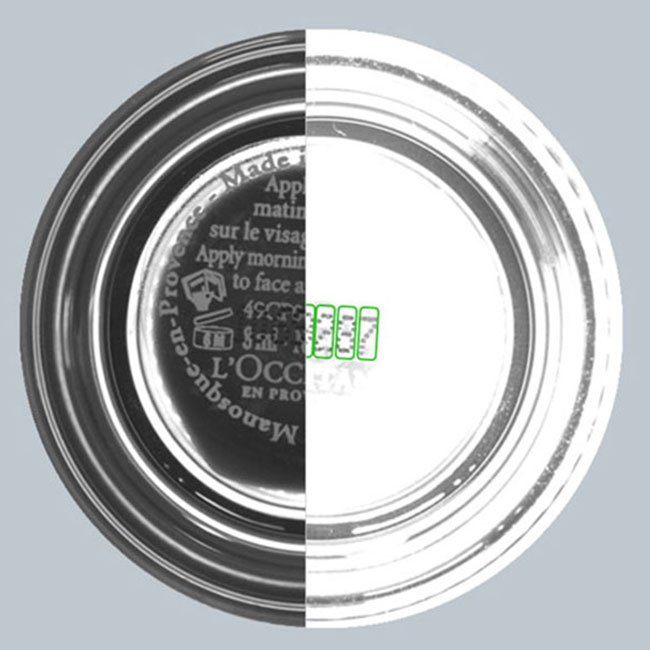
AI & Deep Learning-Based OCR/OCV
Traditional rule-based character recognition reaches its limits with smudges, scratches, or distorted text. Pre-trained neural networks read even fragmented or dot-matrix embossed characters with human-like fault tolerance at industrial speeds.
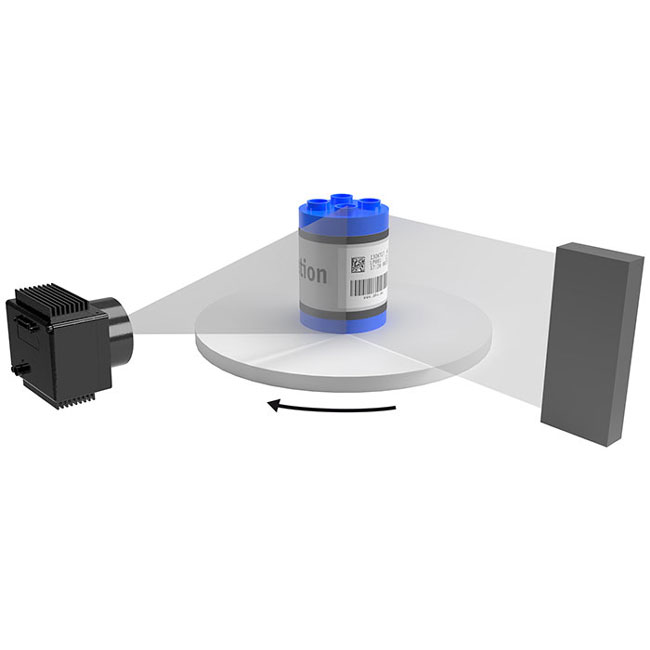
High-Speed Area Scan & Line Scan Cameras
Optimized for rotating components (e.g., pipes, cylindrical sleeves) or ultra-fast conveyor lines. Line scan camera technology enables continuous, uninterrupted unwrapping and 360-degree inspection of perimeter markings on the fly.
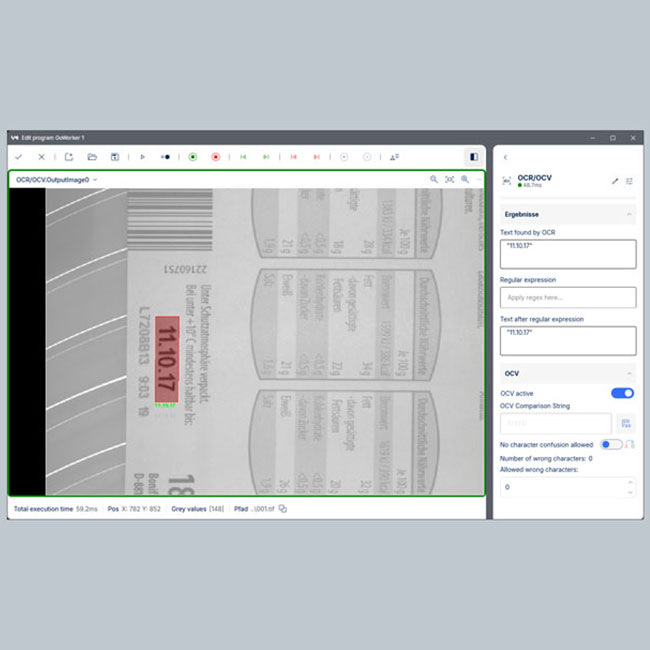
visionManager.Go Ident-Software
Software for quickly setting up code and text verification. 1D and 2D codes such as barcodes, Data Matrix, and QR codes are reliably read – even multiple codes per image at the same time. Plain text is compared to the target value. No programming knowledge or GPU required.

Industries
Proven in Industries with the Tightest Manufacturing Tolerances
When deviations of a few thousandths of a millimeter determine scrap rates, leading manufacturers rely on aku
Automotive & E-Mobility
Direct Part Marking (DPM) laser codes on battery cells, dot peen markings on engine blocks, transmission gears, and airbag modules to ensure full compliance with IATF 16949.
Medical Devices & Pharma
End-to-end Unique Device Identification (UDI) marking on surgical instruments, implants, and blister packaging in strict adherence to EU MDR and FDA regulations.
Electronics & Semiconductors
Inspection of microscopic 2D DataMatrix codes on printed circuit boards (PCBs), silicon wafers, and leadframes with edge lengths of under 1.0 mm.
Food & Packaging Industry
High-speed verification of expiration dates (best-before dates), batch codes, and seal-edge embossed markings at throughput rates of several hundred cycles per minute.
Why aku.automation
Your Partner for Calibrated, Process-Reliable Industrial Metrology
Industrial measurement technology in harsh production environments requires more than just a camera
Mastery of Optical Physics
Poor code readability is usually caused by unwanted glare and improper reflections. Drawing on decades of expertise in optics, polarization, and illumination geometry, we extract maximum contrast from every marking.
Standards-Compliant Verification Beyond Simple Decoding
We do not just tell you if a code is readable right now; we grade the long-term quality and viability of the print image according to internationally binding ISO/IEC standards.
Feasibility Analysis in Our In-House Vision Lab
Send us your most challenging sample parts. In our application laboratory, we evaluate various illumination and camera setups to reliably prove the achievable read rate upfront.
FAQ
Frequently Asked Questions About Code Verification & Optical Character Recognition (OCR, OCV)
Case studies
Case Studies and Successful Customer Projects


Your Contact Person
Christian Merten
Email: c.merten@aku.eu
Phone: +49 151 / 259 190 10